Topics
- Uncategorized (4)
- Fundamental Lectures (1)
- Inuyama Nerds (3)
- Sci Comm Workshops (11)
Recent Education

June 3rd 2025

June 15th 2023

Monthly Archive
- June 2025 (1)
- June 2023 (1)
- April 2023 (1)
- February 2023 (1)
- October 2022 (1)
- July 2022 (2)
Follow Us


Foundational studies in primatology & wildlife science: 2020 edition
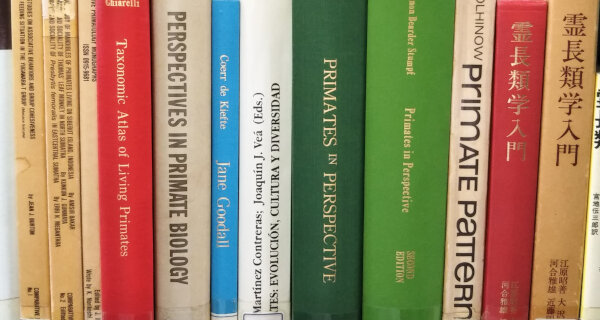
Scientific progress is usually incremental—the fruits of all the hard work that we do as scientists everyday and every night come in little niblets. But once in a long while (and at least once in our lifetime, we all hope), a major breakthrough happens that fundamentally changes how we see the world, and how we think about the world. How do those advances come about?
To get us thinking, we asked the participants of our CICASP Seminar in Science Communication to nominate publications that they considered to be foundational in their own fields of research. Their selections include the true classics as well as ‘future classics’ for students of primatology and wildlife science. Do you see a common thread through these works?
1. Rollin, B.E. (1990) Animal welfare, animal rights, and agriculture, Journal of Animal Science 68:3456–3461.
“From the 1970s, a revolutionary change happened in the study of animal welfare and the laws made to protect them. More specifically, the paper discusses how we interact with animals and how an animal’s nature should be taken into consideration to uphold its psychological well-being. The author evaluated the legal and moral standings of animals in research, and how much more work was needed in agriculture. More importantly, he discussed how to interact, persuade and discuss animal welfare with various types of people and institutions that might have been apprehensive in the past or were still unable to change.”
—Josue Alejandro (PRI doctoral student in Social Systems Evolution)
2. Trut, L.N. (1999) Early canid domestication: the farm-fox experiment, American Scientist 87:160–169.
“This paper goes over the history of the Russian Farm Fox Experiment. This study has been hugely influential in the study of domestication, and is still referenced today as an example of domestication syndrome, a suite of traits that are common in domesticated species but not their wild counterparts.
In the 1950s, Dmitry K. Belyaev started a selective breeding program meant to domesticate silver foxes. The goal was to see if selecting only for tamer behavior would also select for other traits associated with domestication. Belyaev categorized foxes into 3 categories based on their reaction to experimenters, eventually adding a 4th category of exceptionally friendly foxes. Within a few generations, the proportion of foxes in the breeding program with traits associated with domestication like white coloring, floppy ears and short curly tails became much higher than in other silver fox populations.”
—Scott H. Jenkins (WRC master’s student)
3. Jones, C.G., J.H. Lawton, M. Shachak (1994) Organisms as ecosystem engineers, Oikos 69:373–386.
“This paper introduced the concept of ecosystem engineers. The authors formed the theoretical frameworks for studying ecosystem engineering by classifying ecosystem engineers, comparing it with the concept of keystone species. This study provides a distinct perspective and theoretical framework for an ecological process that has long been noticed, and inspired many studies in the following years.”
—Tianmeng He (PRI doctoral student in Ecology & Conservation)
4. Miller, G.A. (1956) The magical number 7 plus or minus 2: Some limits on our capacity for processing information, Psychological Review 63:81–97.
“In his article, Miller discussed a coincidence between the limits of one-dimensional absolute judgment and the limits of short-term memory. In a one-dimensional absolute-judgment task, a person was presented with a number of stimuli that varied on one dimension, and their response to each stimulus was measured. He then studied memory spans by determining the longest list of items that a person could repeat back in the correct order on 50% of trials immediately after presentation. He observed that the memory span of young adults was approximately seven items.
Though influential in several ways, for about 40 years it was oddly followed by rather little research on the numerical limit of capacity in working memory, or on the relationship among the three potentially related phenomena that Miller described.”
—Sanjana Kadam (PRI master’s student in Cognition & Learning)
5. Darwin, C. (1872) The Expression of Emotions in Man and Animals (John Murray, London).
“In this book, Darwin introduced the idea that each emotion is discrete. Most of his work on expression of emotions focused on the face and partially on voice and body posture. He proposed that emotional expressions are universal. He also introduced the methodology of studying emotions using facial expressions.”
—Srishti Tripathi (PRI doctoral student in Cognition & Learning)
6. Meyerhof, W., C. Batram, C. Kuhn, A. Brockhoff, E. Chudoba, B. Bufe, G. Appendino, M. Behrens. (2010) The Molecular Receptive Ranges of Human TAS2R Bitter Taste Receptors, Chemical Senses 35:150–170.
“Tasting bitterness is an innate rejection response to toxic food. Depending on the species, vertebrate genomes contain between 3 and 50 bitter-taste receptors called TAS2Rs. That means that the bitter taste receptors vary among species, and that each species can perceive many substances through bitterness. The authors systematically investigated the molecular receptive ranges of hTAS2Rs, and reported the ligands for most human TAS2R bitter taste receptors. By comparing the ways in which various vertebrates perceive bitterness, this study provides important clues to the pathways for the evolution of dietary behaviors.”
—Rena Numabe (PRI master’s student in Molecular Biology)
7. Jones, K.E., N.G. Patel, M.A. Levy, A. Storeygard, D. Balk, J.L. Gittleman, P. Daszak. (2008) Global trends in emerging infectious diseases, Nature 451:990–993.
“The authors showed that emerging infectious diseases (EIDs) were dominated by zoonosis (60%), of which 72% originated from wildlife, and that EID “events” - new pathogen species or strain starting to infect humans - were significantly increasing over time. They also found that zoonotic and vector-borne EIDs were more concentrated in lower-latitude developing countries, whereas antimicrobial drug resistant bacteria was mostly originating from densely populated developed areas of higher latitudes.
This paper points to the critical needs for health monitoring, better allocation of financial and research resources, conservation of areas rich in wildlife diversity by reducing anthropogenic activity, and better understanding of the factors that increase contact between wildlife and humans and their impact on disease emergence. It’s easy to read, important to wildlife science, and presents a strong argument for the trends.”
—Kenneth Keuk (PRI doctoral student in Social Systems Evolution)
8. Eriksson, P.S., E. Perfilieva, T. Björk-Eriksson, A.-M. Alborn, C. Nordborg, D.A. Peterson, F. H. Gage. (1998) Neurogenesis in the adult human hippocampus, Nature Medicine 4:1313–1317.
“This study is about adult neurogenesis in the human brain. Driven by the long-standing misconception that adult neurogenesis in primates is impossible, this study shows that neuronal differentiation occurs in the subventricular zone (SVZ), hilus, and granule cell layer (GCL) of the hippocampus. Researchers used postmortem brain tissue from cancer patients who received injections of BrdU, which is a marker of dividing cells.
The value of this study to science is twofold: first, it is the first direct evidence that the adult human hippocampus can generate new neurons many decades into its life; second, it also presents various evolutionary implications associated with the phenomenon, such as behavioral flexibility and adaptability, that are still subjects of debate today.”
—Yoko Yamashita (PRI intern student in Phylogeny & Systematics)
9. Trivers, R.L. (1974) Parent-offspring conflict, American Zoologist 14:249–264.
“The author presents a theoretical framework for the study of parent-offspring conflicts. Before this paper, the presumption was that parents and offspring aimed for the same resource or energy allocation—i.e., parents would provide the amount of food that their offspring wanted. Trivers proposed that, instead, this was a conflict with each offspring demanding more and the parents trying to distribute the resources equally amongst all offspring.
This paper brought about a swift shift in how researchers viewed parent-offspring relation and evolution. It inspired behavioural ecologists to think about the evolutionary consequences of this conflict and in particular to mix game-theoretic modelling and behavioural experimentation.”
—Raquel Costa (PRI doctoral student in Language & Intelligence)
Happy reading!